
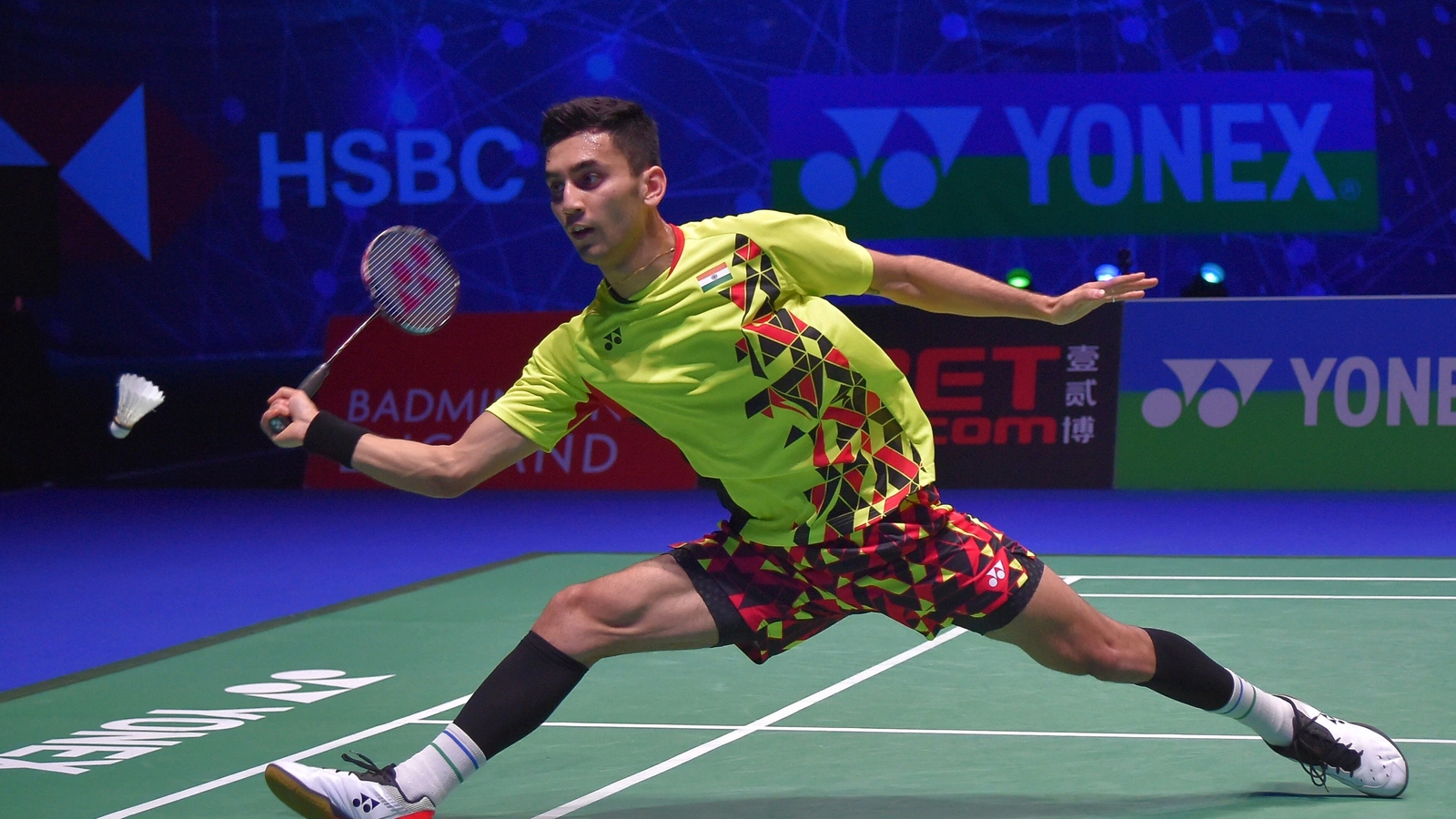
Part I: Origins and Early Life
Lakshya Sen was born on 16 August 2001 in Almora, nestled in Uttarakhand’s serene hills, into a family steeped in badminton tradition. His father, D. K. Sen, a respected coach, and his grandfather, Chandra Lal Sen, were both devoted shuttlers. Even his elder brother, Chirag Sen, embraced the sport professionally .
When his budding potential became obvious, the family relocated to Bengaluru to nurture his talent more effectively. There, young Lakshya stepped into the prestigious Prakash Padukone Badminton Academy—prompted not just by his raw ability, but by a handwritten note he surreptitiously gave to coach Vimal Kumar when he was barely ten, humbly requesting admission .
—
Part II: Junior Career and Global Promise
Lakshya’s junior journey unfolded like a well-scripted drama. In 2016, he claimed his first senior title—the India International Series tournament—even while competing as a junior, showcasing early that he belonged on bigger courts .
He struck gold at the 2018 Asian Junior Championships, stunning the World Junior No.1 in the final—an emphatic statement of intent . That same year, at the Youth Olympics 2018, he earned a silver in the boys’ singles and contributed to a gold in the mixed team event as part of “Team Alpha”—a rare team dynamic for badminton . He capped the year with a bronze at the BWF Junior World Championships, reinforcing that he was firmly on the global radar .
—
Part III: Transition to Senior Circuit – Rising Fast
Lakshya entered the professional arena with precision and poise. A notable victory came at the India Open 2022, where he beat world champion Loh Kean Yew to clinch his first Super 500 title—his arrival was officially announced .
He then defeated Viktor Axelsen, a world number one, in the German Open semifinals—though he fell in the final. Soon after, at the All England Open, he powered his way to the finals by toppling Anders Antonsen and Lee Zii Jia before losing to Axelsen—close, but not quite there .
That same year, 2022, highlighted his team contributions—he played a key role in India’s historic Thomas Cup victory, beating Anthony Ginting in the decisive clash . A crowning moment came at the Commonwealth Games, where he won gold in singles and silver in the mixed team event—a celebration of individual brilliance and collective spirit .
—
Part IV: World Champion and Olympic Dreams
In 2021, Lakshya became one of two Indian men to medal in singles at the World Championships—winning bronze alongside Srikanth Kidambi, who took silver—a first for Indian men in that discipline .
The Paris 2024 Olympics became his defining moment. After early Indian exits, he carried expectations alone, starting with a strong victory over compatriot H.S. Prannoy . Then came a thrilling quarterfinal win against Chou Tien-Chen, sealed in three epic games—19-21, 21-15, 21-12. He became the first Indian male singles player to reach the Olympics semifinals, igniting pride across the nation .
Although he narrowly missed a medal—losing the bronze match to Lee Zii Jia—Lakshya’s journey stood as a testament to grit and potential, arousing hope for Indian badminton’s future .
—
Part V: Post-Olympics – Trials and Transitions
After Paris, the road proved rocky. Early exits at tournaments like Kumamoto Masters, Denmark Open, and Arctic Open pointed to a dip in form and confidence. Analysts emphasized introspection over excuses, and pressure began to mount .
In 2025, updates were mixed. At the Macau Open Super 300, his semifinal bid was cut short in straight sets, and concerns about shoulder, back, and ankle injuries surfaced . He also suffered disappointment at the Japan Open Super 750, exiting early, and faced an opening-round loss at the BWF World Championships, sliding out against top seed Shi Yu Qi .
—
Part VI: Personal Evolution and Team Support
Beyond wins and losses, Lakshya’s growth is shaped by mentorship and allies: coached by Vimal Kumar; mentored by Prakash Padukone; guided through stints under Yoo Yong-sung, Morten Frost, and Peter Gade; and supported by mental coach Paddy Upton and innovative physiotherapy and conditioning routines including ice baths and sauna therapy .
In a major move augmenting his long-term vision, Lakshya signed with talent management firm Cornerstone Sport in September 2025, joining an elite roster including PV Sindhu and Sania Mirza. He described the partnership as a “crucial part of that journey” toward elite success .
—
Part VII: Playing Style, Character, and Mental Fortitude
Lakshya plays with a name befitting his style—Lakshya (goal) reflects his determination and relentless pursuit of excellence. His play combines calculated aggression, crisp net control, and explosive footwork, anchored in physical speed and mental clarity .
He once smashed at speeds reaching 420 km/h during the Canada Open final 2023, showcasing raw power—but more importantly, his game is measured: a mix of smashes, half-smashes, and precision drops that disrupt rivals with both strength and strategy .
From breaking records by entering the National Men’s Finals at just 15—surpassing even Padukone’s mark—to handling the weight of an entire nation’s hopes in Paris, Lakshya’s composure under pressure is remarkable .
—
Part VIII: Legacy, Lessons, and Looking Forward
Lakshya’s impact extends beyond medals. As a former World Junior No.1 turned senior standout, he embodies the continuity of Indian badminton’s rise—from Saina Nehwal and PV Sindhu to a new generation led by Karwala, including Lakshya himself .
Even amid recent setbacks, he remains a beacon—resilient, evolving, and hungry for redemption. His alliance with Cornerstone Sport signals a more managed, holistic path: performance, brand, and legacy moving in harmony.
For the badminton fan, his journey is alive: from Almora’s hills to Bengaluru’s high-performance arenas, from junior promise to Olympic heartbreak, and now, recovery and resurgence.
—
Part IX: Final Reflections
Lakshya Sen is more than a playing style or a collection of scores. He’s the embodiment of ambition molded through adversity. His story—of handwritten perseverance, junior brilliance, an Olympic trailblazer, post-Olympic struggles, and now strategic advancement—reads like a novel in motion.
In every trial, he teaches us: goal-setting isn’t enough—it’s about persistence, mentorship, reinvention, and rising again.
As he steps back onto the court, aided by world-class support systems and a renewed mindset, one can’t help but feel that the best chapters of his story lie ahead.



Leave a Reply