
Yonex Astrox 99 Pro: The Racket That Changed the Way I Play Badminton
I’ve played badminton for years—over a decade, if we’re counting from when I first picked up a cheap plastic racket in school. Back then, it was just a way to kill time after classes. No fancy footwork, no tactical rallies—just wild swings and hoping for the best. Fast-forward to now, and badminton is more than just a hobby. It’s a discipline, a workout, and—if I’m being honest—a bit of an obsession.
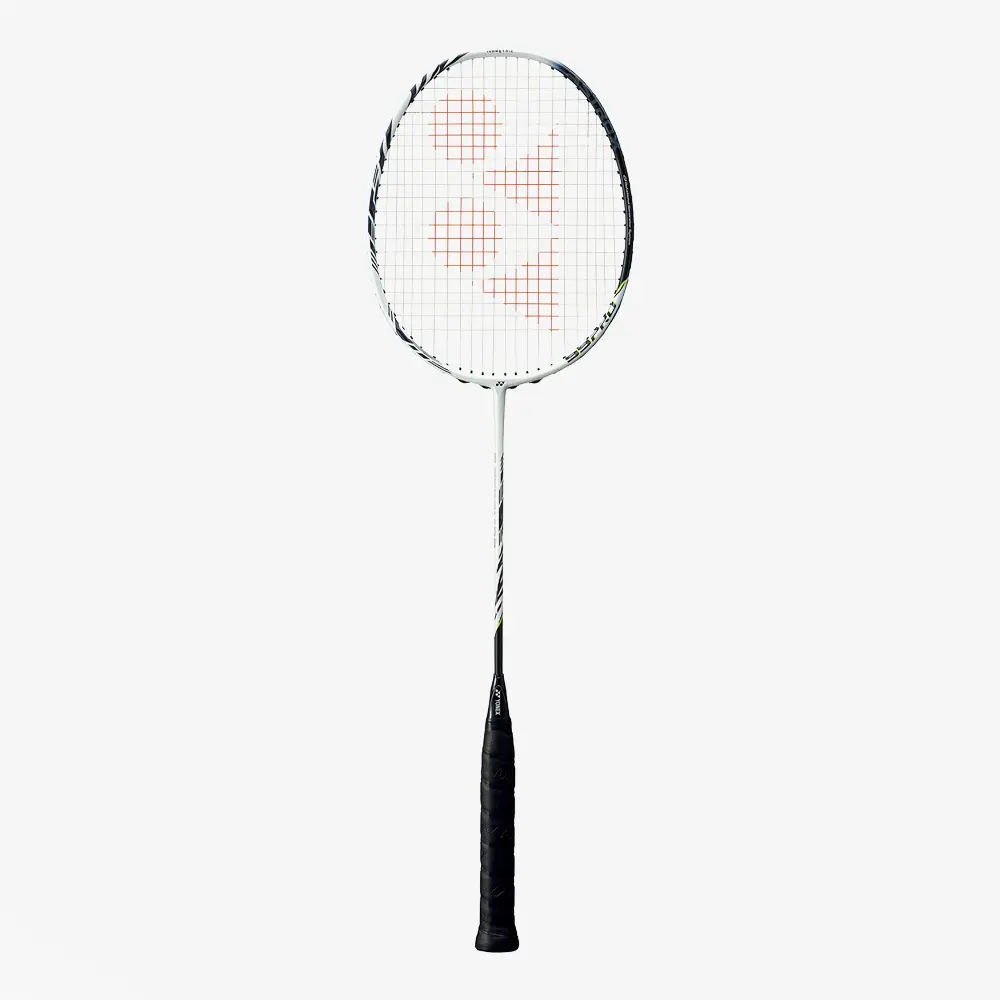
And a big part of that obsession began the day I picked up the Yonex Astrox 99 Pro.
I didn’t know it at the time, but this bright orange racket would change the way I approached the game. Not just in terms of performance, but in mindset too.
The First Time I Swung It
A friend had recently bought the Astrox 99 Pro and let me try it during a casual evening match at our local court in Pune. The moment I lifted it, I could feel the difference. It wasn’t just the design or the vibrant orange paint—it was the weight, the stiffness, the intent behind the build.
It felt solid. Not heavy in a burdensome way, but heavy in the right places.
My first few hits? Honestly, kind of a mess. The timing was off, and I wasn’t connecting cleanly. But that one clean smash I landed—it echoed through the entire hall. The sound, the speed, the dip—it was like nothing I’d felt before. It was love at first crack.
The Learning Curve Was Real
Let me be clear: this isn’t a beginner-friendly racket. Not even close. For the first few sessions, I felt like I was holding a sword I hadn’t been trained to use.
I had to relearn parts of my technique. My clears were falling short, my drops were inconsistent, and quick drives at the net felt just a bit slower. I considered going back to my older racket—a more forgiving even-balanced one I’d used for months.
But something kept me coming back to the Astrox. Maybe it was that satisfying thud on a perfect smash, or maybe I just wanted to conquer it. Either way, I stuck with it—and over the next few weeks, it began to make sense.
I wasn’t just playing better. I was thinking better. I wasn’t relying on wrist flicks or quick fixes. I was moving into position, focusing on footwork, tightening my grip—getting deliberate with every shot.
Design That Makes a Statement
The Astrox 99 Pro looks like it means business. The Sunrise Orange and Matte Black combo is loud, but not in an obnoxious way. It’s bold. Like a sports car that doesn’t have to rev to get attention.
The racket’s frame is built with HM Graphite, reinforced with Volume Cut Resin, and a bit of Tungsten in strategic spots. All that basically means it feels strong and unyielding. When you hit hard, it responds. When you mistime your shot—it reminds you.
The shaft is extra stiff, which is something I really had to get used to. It doesn’t give you any extra help—no artificial flex, no trampoline effect. But once you figure out the right timing and technique, it feels surgical. Every shot feels intentional.
That Smash, Though…
If there’s one thing this racket does better than anything else—it’s smashing.
I’m not kidding. Once I got the hang of it, the power I could generate with this thing was insane. My smashes went deeper, dipped faster, and forced way more errors from my opponents. One of my friends—he’s a defensive doubles player—actually stepped back and said, “What was that?” after I sent one past him that barely gave him time to react.
What makes the difference is the Rotational Generator System. Yonex has distributed weight across the head, shaft, and grip so that the swing flows naturally from prep to follow-through. It’s not just about raw power—it’s about efficient power.
Control Once You Master It
Initially, the control was tricky. I was used to a slightly more flexible racket, so adjusting to the extra stiffness took time.
But once I adapted? My net drops became tighter. My half-smashes and body smashes landed where I wanted. Pushes to the backcourt didn’t float—they drove.
This racket doesn’t give you anything for free. You have to earn your control. But that’s also what makes it so satisfying. You know when your shot lands well, it’s because you made it land well.
What About Defense?
Let’s be honest—this isn’t a defensive racket.
If you’re a doubles player spending most of your time at the net or blocking smashes, the Astrox 99 Pro might feel a bit slow. It’s not sluggish exactly, but in super-fast exchanges, it lacks that lightning-quick maneuverability that lighter rackets have.
That said, once I got more used to the weight, I managed just fine in defensive situations. It just required more anticipation and slightly faster hand positioning.
It’s manageable—but it’s not the main strength of this racket.
Longevity and Build Quality
I’ve been using this racket for a little over a year now. I’ve restrung it multiple times, clashed with another racket once (minor paint chip), and played on both wooden courts and synthetic. Still solid. No frame distortion, no performance drop.
I’ve tried rackets in the past that started rattling or lost tension quickly. This one hasn’t. It’s built like a tank—but with the precision of a scalpel.
How It Compares to Other Popular Rackets
If you’re wondering how the Astrox 99 Pro stacks up against others, here’s a quick rundown based on personal experience:
Astrox 88D Pro – Great for doubles, especially backcourt, but slightly more forgiving and less stiff.
Nanoflare 1000Z – Faster and easier to maneuver, better for front-court play or defensive players.
Voltric Z-Force II – Also very powerful but even more demanding. It’s a love-hate kind of racket.
Astrox 77 Pro – Balanced and easier to use, but doesn’t have the same power punch.
Among all of them, the Astrox 99 Pro felt like the most complete racket for aggressive singles play. If you’re a backcourt smasher, this one’s designed for you.
String and Tension Setup (What Works for Me)
I’ve tried a few combinations, but this is what felt best:
String: BG80 Power or Aerobite
Tension: 26–27 lbs
At this tension, I could feel every shot clearly. There was good repulsion without losing control. Anything below 24 lbs on this racket, and it starts to feel dull.
But again—this depends on your level. If you’re just starting out, keep tension around 24–25 lbs to avoid elbow strain.
So, Who Should Buy This?
This racket isn’t for everyone. But if you tick some of these boxes, it might be the perfect fit:
Great choice if:
You’re playing intermediate to advanced singles
You prefer aggressive, backcourt-heavy gameplay
You don’t mind adjusting to a stiff shaft and head-heavy build
You’re looking to push your game to the next level
Maybe not for you if:
You’re still new to the sport
You play mostly doubles at the net
You prefer something light and fast
Final Thoughts: A Racket With Personality
I’ve played with many rackets over the years. Some come and go. Some you grow into. But the Yonex Astrox 99 Pro—this one sticks with you.
It’s not just a piece of equipment. It’s a partner that forces you to be better. It holds up a mirror to your weaknesses and dares you to fix them. And when you do—it rewards you with a level of power and control that makes you fall in love with the game all over again.
Every time I step onto the court, I feel that same energy I did the first time I heard the clean crack of that smash. That’s how I know it’s the right racket for me.
And maybe, just maybe—it’s the right one for you too.
Yonex Astrox 99 Pro
Latest Post
- Lakshya Sen: A True Badminton Prodigy

- P. V. Sindhu: The Shining Star of Indian Badminton

- Victor JetSpeed: The Racket That Redefined Speed and Precision

- Cosco CB80 Badminton Racket: The Underdog That Punches Above Its Weight

- Cosco CZ 50 Racket Review: The Trusty Companion That Punches Above Its Weight
Categories
- Blog (6)
- Uncategorized (16)
Leave a Reply